


This is a summary of my opinion article posted in French, on the website :
https://geopolitique.ma/2025/04/29/le-maroc-historique-entre-ouverture-et-retranchement/
Morocco and its authentic borders
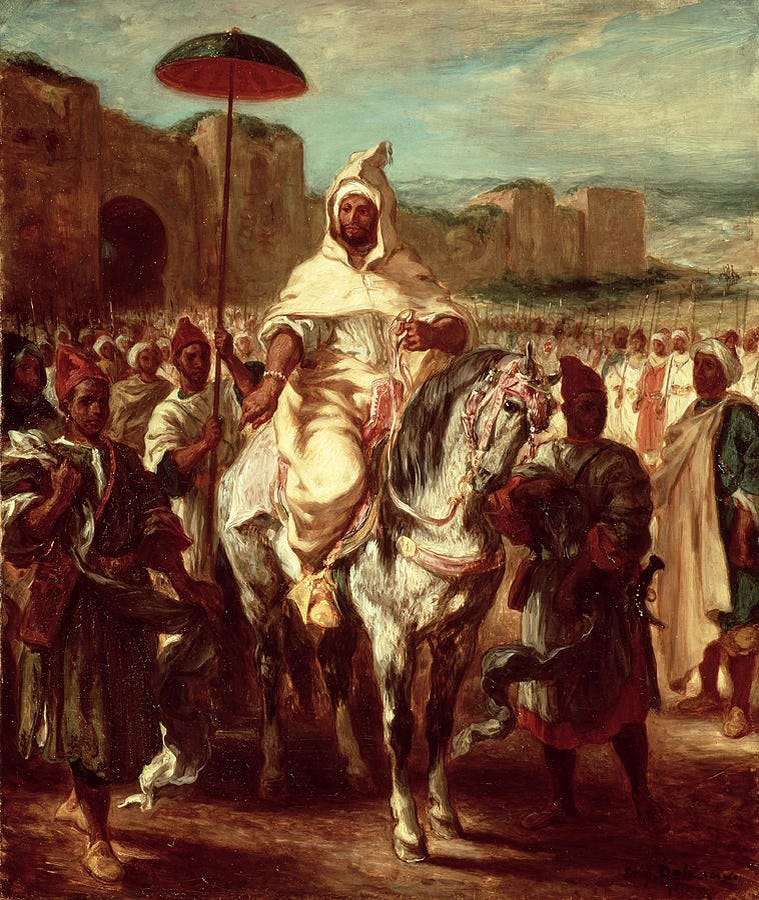
The Kingdom of Morocco is one of the oldest monarchies in the world, alongside Japan. This longevity gives it a particular historical depth, marked by centuries of expansion, withdrawal, resistance, and resilience. In this article, I explore the construction of the Moroccan state, the loss of its territories under colonization, and the complexity of current territorial claims, particularly with relation to neighboring Algeria.
A Thousand-Year-Old Monarchy with a Rich History
Since the establishment of the first dynasty by Idriss Ist, in 788 AD, Morocco has known several great dynasties (Almoravid, Almohad, Marinid, Saadian, until the actual Alawite). These dynasties have marked the collective imagination with their power and influence. Rulers such as Youssef Ibn Tachfine, El Mansour Dahbi, and Moulay Ismaïl extended Moroccan influence far beyond its current borders: to Andalusia in Europe, to the Sahel to the South, as far as the Senegal River, and sometimes to present-day Libya to the East.
Despite invasions, internal crises, and isolation, Morocco has survived periods of hardship and decline. This journey was inseparable from a central power embodied by the Sultan, supported by a political and religious structure based on the "Bayaa", a written act of allegiance by tribal chiefs towards the Sultan and the Throne. This is a Moroccan specificity that still lives on today.
The Impact of Colonization on Borders delimitation
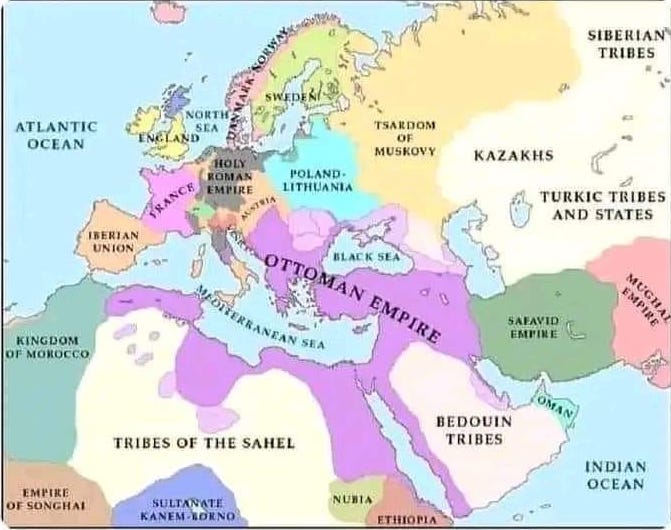
At the end of the 19th century, Morocco was the only independent state in a region where future countries did not yet exist in their actual form, such as Mauritania, Mali. Nor was there any thing like what came to be supposedly named “western sahara” that a guerrilla group wanted to cut from Morocco and pretended to independence. Colonization radically transformed the geopolitical map of North Africa and the continent as a whole. In 1900, France and Spain signed the Treaty of Paris, establishing new borders, but with serious consequences for Morocco, which lost more than 80% of its historical territories without war.
Subsequently, French colonization annexed parts of south-eastern Morocco to Algeria, that was in fact a French department. Other areas were integrated into colonial entities such as French West Africa (AOF). These reconfigurations ignored the social and historical realities of local tribes related to Morocco.
A gradual process of territorial recovery
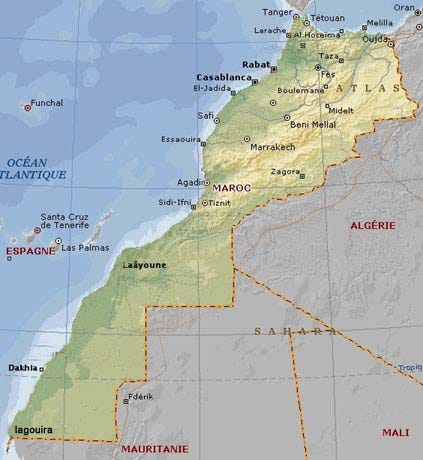
After its independence from France and Spain for the main part of the country, in 1956, Morocco began a long process of territorial recovery of provinces that were still and Spanish rule: Tarfaya was recovered in 1958, Sidi Ifni in 1969, and the Saharan provinces thanks to the famous Green March in 1975. This recovery was often carried out within a diplomatic, sometimes conflictual framework, but always linked to the country's history and will to safeguard its sovereignty and territorial integrity.
Morocco continues to this day to claim the cities of Sebta and Melilla (under Spanish control), as well as some small neighboring islands. These claims are based on historical arguments but run counter to the postcolonial legal principle of the inviolability of inherited borders.
Moroccan Western Sahara: An Emblematic Case
The Western Sahara issue is at the heart of Moroccan-Algerian tensions since Spain’s withdrawal from this territory in 1975. Contrary to general belief, Morocco began its claim about this territory at the United Nations in 1963, well before the creation of the separatist movement supported, armed and financed by Algeria and Libya.
The International Court of Justice, in its 1975 opinion, recognized the existence of ties of allegiance between Saharan tribes and Moroccan Sultans, thus rejecting the notion of a territory without a master (terra nullius). This historical foundation continues to inform Morocco's position on the diplomatic and legal fronts.
A Difficult Neighborhood with Algeria
Relations between Morocco and Algeria have been strained since the latter's independence in 1962. Morocco's support for the Algerian war for Independence was not rewarded. On the contrary, Algeria refused to reconsider the borders inherited from colonialism, particularly concerning territories that Morocco historically considers part of the Kingdom (Tindouf and Béchar regions, etc.).
The Sand War in 1963, between Moroccan and Algerian armed forces, left a lasting mark on bilateral relations. The border has been closed by the Algerian government in 2004, and diplomatic relations have been severed since 2021 by the Algerian regime. This regime perceives Moroccan demands as a threat, fueling hostile rhetoric in the media and official speeches against Morocco and its Monarchy.
The "Authentic Borders"
The Article 42 of the Moroccan Constitution refers to the "territorial integrity of the Kingdom within its authentic borders." This formulation has sparked debate, particularly internationally. For Morocco, this is not a matter of expansionism, but rather a reminder of its historical legitimacy over certain territories lost during colonization.
This notion is based on historical and religious arguments, as well as social and ethnic links, not solely on classical international law. The treaties signed by Moroccan Sultans, before and after colonization, mainly concerned peace, trade, and the recognition of authority by concerned tribes, but rarely dealt with fixed border demarcations.
Towards growing recognition?
Despite the reluctance of some countries, recognition of Morocco's sovereignty over its southern provinces, the so-called Western Sahara, is gaining ground all over the world. Spain (2023) and France (2024), the two previous colonial powers, have officially recognized this sovereignty, provoking a strong reaction in Algeria that called its ambassadors back from both countries and entered into diplomatic crises with them. The arrest of Algerian-French writer Boualem Sansal in November 2024, for having mentioned in an interview the Moroccan origin of territories in western Algeria, illustrates the extreme sensitivity of the subject to the military regime.
A question of history, law, and identity
The history of Morocco and its borders cannot be reduced to lines drawn by colonial powers in their agreements and maps. It is based on a long history, ancestral political practices, and deep social ties between the central government and peripheral territories and populations. Even today, the Kingdom claims, within a peaceful framework, the right to restore its sovereignty over territories it historically considers its own.
This is a matter of an identity, a diplomatic and legal issue that continue to shape relations between states in the North African region. Yet, Morocco fully abides by the international law and respects its commitments and signed treaties.